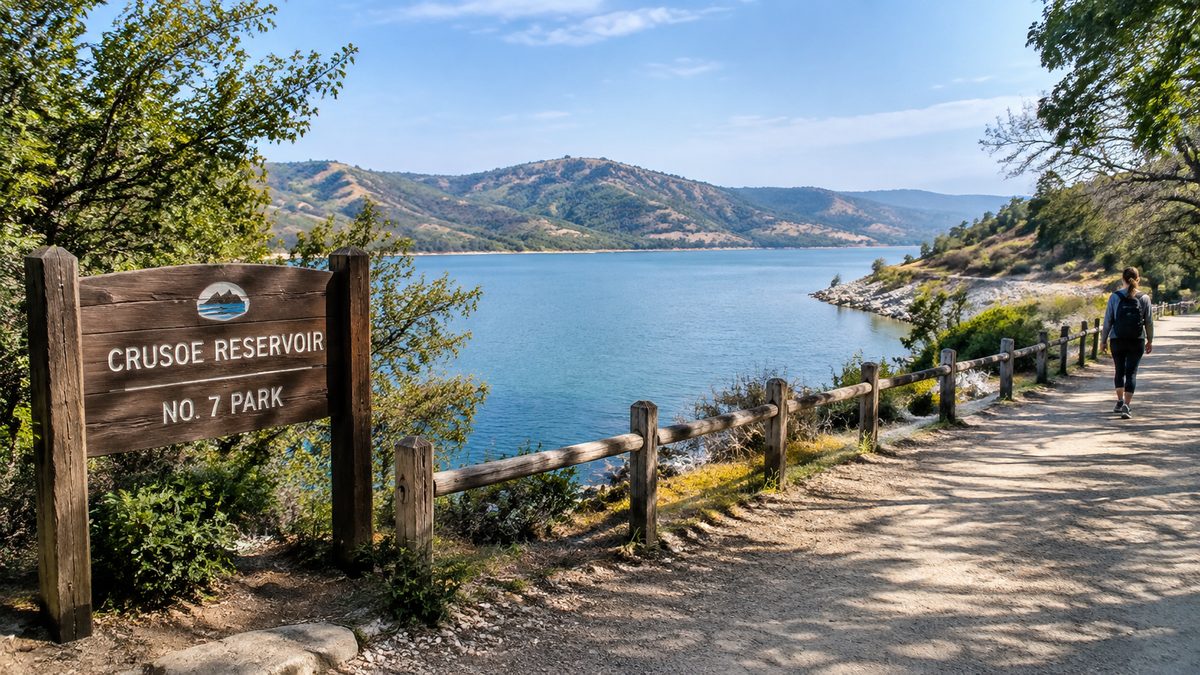
Crusoe Reservoir and No. 7 Park: Walks, Facilities and Visitor Rules
Crusoe Reservoir is the active Recreation area, while No. 7 Park is the quieter place for walking, nature study and views across protected water. Together, they offer a mix of open water, Bushland and Wetland habitat near Kangaroo Flat, Victoria. The key is to treat each reservoir as a different place. Activities allowed at Crusoe may be restricted at No. 7, so read the signs beside the water before entering or launching anything.
This is a broad reserve rather than a small town park. Allow time to find the right entrance, read the site map and walk between points of interest. Conditions can also change after rain, during high fire danger or when Water quality needs testing.
Which part of the reserve should you visit?
Choose Crusoe Reservoir if you want access to the water, a picnic base or a more social outing. Choose No. 7 Park if your main aim is a quiet walk through native vegetation. Visitors can explore both in one trip, but they should not assume that the same rules apply on each side.
Crusoe has broad views, open banks and places where people gather during warm weather. No. 7 feels more enclosed. Its conservation value shapes how visitors can use it. This difference protects habitat while still letting people see an old part of Bendigo's water supply system.
The two areas are close enough to share a visit, yet distances on the ground can feel longer than expected. A route that looks short on a map may include exposed sections, uneven ground or a return walk to the car. Pick one main goal before setting out.
What are the walks actually like?
The trail network includes reservoir-edge paths, wider management tracks and narrower links through Bushland. Some sections are firm and easy to follow. Others may have loose gravel, leaf litter, shallow ruts or mud after rain. This is a natural reserve, so do not expect a smooth urban circuit all the way around.
A simple visit can start with a short out-and-back walk from the main Crusoe Reservoir visitor area. Follow the signed track beside the water, stop at the viewpoints and turn back before the distance becomes tiring. This works well for families because the return route is clear and the water remains a useful point of reference.
Longer walks can link reservoir views with the woodland around No. 7. Use the map at the reserve and follow named or marked tracks. Unmarked shortcuts cause erosion, spread weeds and may lead into restoration zones. They can also leave walkers on the wrong side of a waterway or fence.
How should you plan a walk around the reservoirs?
Plan by time rather than by guesswork. Walk for one quarter of your available time, review the route, then decide whether to continue. Keep at least half the visit for the return journey. Heat, wet ground and stops to watch Wildlife can slow the pace.
Wear closed shoes with grip. Carry drinking water because reservoir water is untreated and must not be used as drinking water. A hat and sun protection matter on exposed banks, even when nearby tracks look shaded.
After heavy rain, avoid soft track edges and flooded crossings. During hot or windy weather, choose a shorter route close to the visitor area. Bendigo summers can turn an easy walk into a hard one within an hour.
Can you swim at Crusoe Reservoir?
Swimming is associated with the designated recreation area at Crusoe Reservoir, subject to current signs, closures and Water quality advice. Do not enter the water at No. 7 Reservoir. Its role is tied to habitat protection, and access controls may be stricter.
Reservoir swimming is different from using a staffed pool. There may be sudden depth changes, cold patches, submerged branches, soft mud and low visibility. There are no lane ropes or lifeguards watching each swimmer. Children need close adult supervision at the bank and in the water.
Enter only at an approved access point. Do not dive from banks, structures or old water infrastructure. Keep clear of outlet works and fenced areas. A bright swim cap or visible flotation aid can help other water users see you, but it does not replace swimming skill.
Blue-green algae, storm runoff and other events can affect Water quality. A reservoir may look clear while an official warning is active. Check current council advice and obey notices at the site. If a sign says the water is closed, stay out even if other people are swimming.
Where can you go fishing?
Fishing may take place in permitted parts of Crusoe Reservoir when the waterway is open. Anglers must follow Victorian fishing laws, including licence rules, possession limits, size limits and restrictions on equipment or bait. Site signs can impose extra controls to protect the reserve.
Choose a stable bank where your gear does not block the walking track. Keep hooks, line and bait away from picnic areas. Lost fishing line can trap waterbirds, reptiles and a Kangaroo moving through shoreline plants. Take every piece of line home, including short cut ends.
Do not use No. 7 Reservoir as an alternative fishing spot unless a current sign clearly permits it. Protected water and habitat zones are not open simply because they can be reached on foot. Fences and closed tracks mark real boundaries.
Before a fishing trip, check the Victorian Fisheries Authority rules and the local notices displayed at the reserve. Water level, algae management and conservation work can change where access is safe.
What facilities are available?
The main visitor facilities are concentrated around the developed Crusoe Reservoir area. Depending on the access point, visitors may find parking, toilets, picnic tables, seating, shelters and open spaces suited to a packed lunch. Direction signs and reserve maps help separate visitor zones from protected areas.
Facilities are spaced across a large site. Do not assume that a toilet, drinking tap or sheltered table will be beside every track. Use the main visitor area before starting a longer walk and carry what you need.
Mobile reception may vary around low ground and dense trees. Save a map before arriving, especially if you plan to explore beyond the main reservoir bank. Tell someone your route when walking alone.
Accessible use depends on the chosen entrance and recent track conditions. The developed area is the best starting point for visitors using a wheelchair, pram or walking aid. Natural trails can narrow or become rough beyond it. Inspect the first section before committing to a long route.
What visitor rules should you know?
The rules protect drinking-water history, native habitat and other visitors. Read the entrance signs because temporary directions take priority over general advice. Closures can apply during fire danger, storm damage, maintenance or poor Water quality.
- Use formed tracks and approved visitor areas.
- Obey all water-access, Swimming and Fishing signs.
- Keep out of fenced infrastructure and restoration zones.
- Take rubbish, food scraps, fishing line and broken gear with you.
- Do not light fires unless a sign clearly allows their use in a provided facility.
- Do not camp or stay overnight unless the site has been formally opened for that purpose.
- Leave plants, timber, rocks and historic structures where they are.
- Do not feed Wildlife.
- Follow all directions about dogs, bikes, watercraft and vehicle access.
Rules for dogs deserve special attention. Domestic animals can disturb nesting birds and trigger stress in native animals. They can also foul areas near the water. Check the signs at the entrance before bringing a dog rather than assuming that a leash makes access lawful.
Motorbikes and off-road vehicle use damage tracks and habitat. Vehicles belong on public access roads and marked parking areas. Gates must remain clear so emergency and maintenance crews can enter.
Why are the No. 7 rules stricter?
No. 7 supports sensitive Wetland and woodland habitat. Quiet water, reeds, dead trees and ground cover provide feeding or nesting space for birds, frogs, reptiles and mammals. Human access can break that pattern, especially near the shore.
A visitor may see an empty bank and think it is unused. In practice, that bank may hold nests, shelter small animals or form a safe route between water and Bushland. Staying on the track protects habitat that is easy to miss.
Noise also carries across still water. Keep music low and watch birds from a distance. If an animal changes direction, freezes or leaves the area, you are too close. Step back and give it a clear escape route.
Snakes may be active during warm months. Watch where you place your feet, keep to open tracks and never try to move or corner one. A Kangaroo can also become dangerous when blocked or approached for a photo. Give it space and let it choose its path.
When is the best time to visit?
Early morning suits walking, birdwatching and photography. The air is cooler, the water is often calmer and Wildlife tends to be more active. Late afternoon can also be pleasant, but leave enough daylight to return to the car.
Spring brings flowers and active birdlife. Warm weather makes Crusoe Reservoir more appealing for water-based Recreation, though heat and algae alerts need more attention. Winter can offer crisp walking conditions, while rain may leave natural tracks wet or slippery.
Weekends and hot days draw more visitors to the main reservoir. A weekday morning gives a quieter experience. If the parking area is busy, do not create a space on grass or beside a gate. Use a marked area or return at another time.
How can families have a safer visit?
Keep the outing simple. Start near the facilities, choose a clear turnaround point and set rules before approaching the water. Young children should remain within arm's reach beside steep or slippery banks.
Bring drinking water, sun protection, food and a small bag for rubbish. Pack insect repellent during warm, still weather. Check children for ticks and grass seeds after walking through long vegetation.
Give children a nature task that does not disturb the reserve. They can count bird types, look for animal tracks or sketch the shape of the reservoir. Do not let them collect feathers, plants or rocks.
If someone becomes separated, the group should return to the last agreed meeting point rather than spreading out. The main visitor area or parked car makes a better meeting place than a vague point along the shore.
How does this visit differ from an urban Bendigo park?
Crusoe Reservoir and No. 7 Park demand more planning than a paved lake circuit. Tracks may be rougher, facilities are less frequent and natural hazards remain part of the visit. In return, the reserve offers more space, quieter water and a stronger sense of the region's native environment.
The site lies near Kangaroo Flat, Victoria, within easy reach of Bendigo, yet it does not work like a city garden. Visitors need to carry water, manage their own rubbish and respond to changing conditions. Those small steps help keep the area open for low-impact Recreation.
The water infrastructure also tells part of the area's history. Reservoir walls, channels and related structures were built for a working purpose. View them from legal tracks and never climb fences or enter service areas for a closer look.
What should you check before leaving home?
Check the weather, fire danger rating, reserve notices and current Water quality advice. Confirm that your planned activity is allowed in the part of the park you intend to use. Fishing rules and licence needs should be checked through the Victorian Fisheries Authority.
Download a map or take a clear photo of the map at the entrance. Note your parking area, chosen track and turnaround time. A fully charged phone helps, but it should support a plan rather than replace one.
Bring enough water for the whole visit. Add sturdy shoes and any activity-specific safety gear. Leave valuables out of sight and lock the vehicle.
Before entering the reserve, read the current signs, choose either Crusoe for active water use or No. 7 for a quiet nature walk, and follow that area's rules for the whole visit.