Bendigo or Ballarat: Which Should You Choose for a Day Trip?
Choose Bendigo for art, architecture and an easy city day; choose Ballarat for a deeper Gold rush experience led by Sovereign Hill. Both cities make rewarding day trips from Melbourne, but they suit different travellers. Bendigo feels compact and polished. Ballarat offers bigger historic attractions that take longer to explore. Your best choice comes down to what you want to do, how much ground you want to cover and whether you prefer a flexible day or one main experience.
The key mistake is treating the two cities as copies of each other. Both grew rich during the Victorian gold rush, yet they tell that story in different ways. Bendigo mixes mining history with grand streets, galleries and Chinese heritage. Ballarat builds much of the visitor experience around immersive history, rebellion and a broad collection of historic buildings.
Which city gives you the stronger day trip?
Bendigo gives most first-time visitors the easier all-round day. Its central attractions sit close enough together to support a relaxed plan. You can see a major exhibition, admire Victorian era buildings, have a good lunch and add one historic experience without spending the whole day watching the clock.
Ballarat is the stronger choice when gold history is the main reason for your trip. Sovereign Hill can fill half a day or more once you account for demonstrations, historic shops and the underground mine experience. That focus makes Ballarat memorable, but it also leaves less room for other stops.
Think about the day you want to remember. If the ideal memory is walking through an old mining town while costumed staff bring history to life, pick Ballarat. If it is moving between art, ornate buildings and a real mine within one city, pick Bendigo.
How much does travel time matter from Melbourne?
Ballarat usually has the travel-time advantage. By car, it is often about 90 minutes from central Melbourne in ordinary conditions. Bendigo is closer to two hours. Train trips follow a similar pattern, though the exact time changes by service and stopping pattern.
That gap matters more than it first appears. Saving about half an hour each way can give you another hour at an attraction or allow a later start. Families with young children may value that more than adults who are happy to read or rest on the train.
The road experience also differs. Both routes are straightforward, but weekend traffic leaving Melbourne can disrupt neat arrival plans. If you drive, leave before the main morning rush and check live traffic before departure. If you take the train, check the return services before planning dinner or a late museum visit.
Bendigo partly offsets its longer trip with a more convenient centre. Once you arrive, several major places are within a comfortable walk or short ride. Ballarat attractions spread across a wider area, so a car can save time if you want to combine Sovereign Hill with Lake Wendouree or the Eureka Centre.
Which place tells the gold story better?
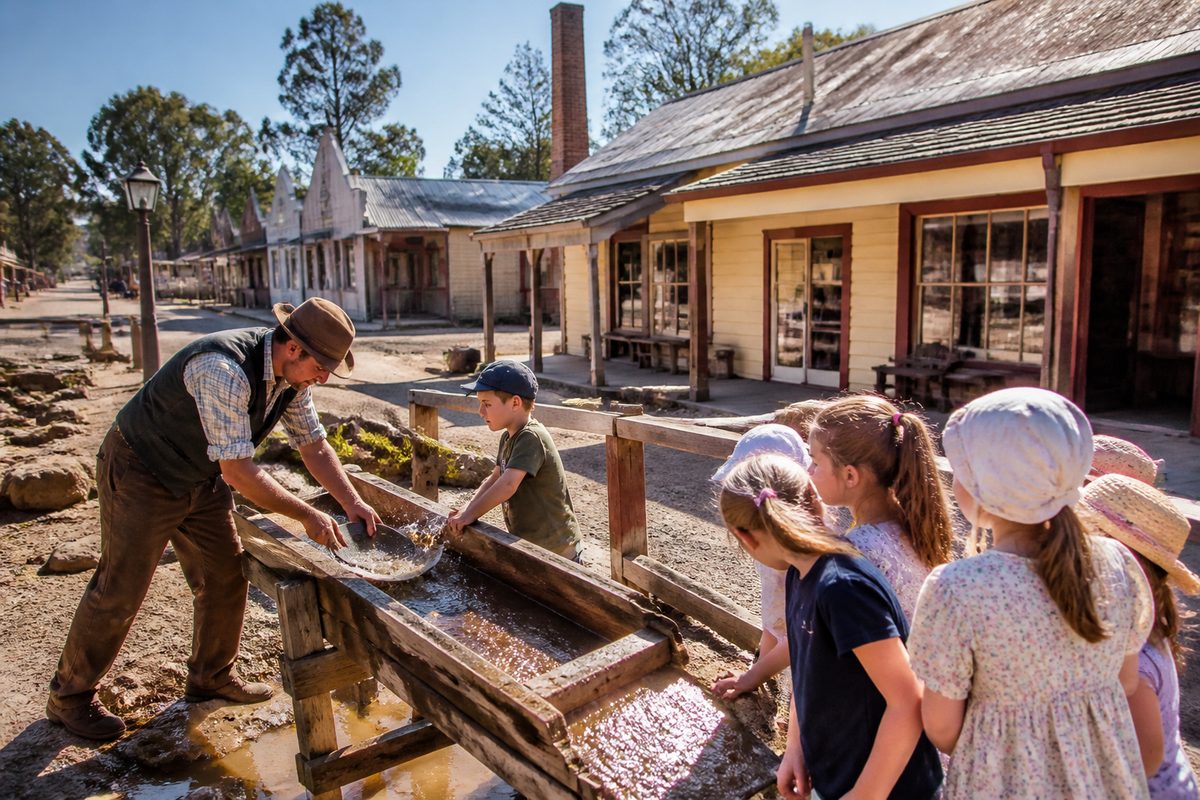
Ballarat gives you the broadest staged account of the Gold rush. Sovereign Hill recreates a mining settlement through working spaces, staff in period clothing and hands-on activities. It works well for children because history becomes something they can see and touch. Adults also gain a clear sense of how mining wealth shaped work, trade and daily life.
The Eureka Centre adds the political side of the story. It focuses on the Eureka Stockade and the struggle over mining licences, representation and authority. Pairing it with Sovereign Hill shows that the Victorian gold rush involved conflict as well as wealth.
Bendigo offers a more direct encounter with mining through the Central Deborah Gold Mine. Rather than spending most of the visit in a recreated town, you enter a preserved mine site and learn how miners worked below ground. The physical setting makes the labour feel real. Low ceilings, hard rock and mining gear give the story weight that display cases cannot match.
A common day-trip mistake is booking a mine tour when someone in the group dislikes enclosed spaces. Check the tour conditions before paying. A visitor who feels tense underground will not care how good the guide is. Ballarat may suit that group better because much of its history can be experienced above ground.
Choose Ballarat for a wide, theatrical view of goldfield life. Choose Bendigo for a focused mining experience tied to the city that still surrounds it.
Is Bendigo better for art and architecture?
Yes. Bendigo is the clear choice when art or grand architecture matters as much as history. Bendigo Art Gallery runs a strong program and has built a reputation for exhibitions that can justify the trip on their own. Check what is showing before you choose a date, since a major exhibition can affect ticket demand and how long you spend inside.
The streets around the gallery add value without needing another booking. Bendigo's gold wealth funded ornate civic buildings, hotels and places of worship. Their scale makes the city feel richer and more formal than its size suggests. You can enjoy that setting while walking between stops, rather than driving to a separate heritage zone.
The heritage streetcar gives Bendigo another useful edge. It acts as transport and an attraction, so the journey between parts of the city becomes part of the visit. It is especially helpful for travellers who want to reduce walking, though you still need to check operating times and stop locations.
Ballarat also has fine historic buildings and a respected art gallery. Its strongest day-trip identity, however, comes from larger sites rather than the streets between them. Pick Ballarat if you want to enter a complete historic setting. Pick Bendigo if you enjoy the way history shapes an active city centre.
Which city works better without a car?
Bendigo is usually easier without a car. The railway station is near the centre, and the compact layout supports a day built around walking, local buses or the heritage streetcar. You still need to allow enough time if your plan includes an attraction outside the core, but a car-free visit does not feel like a compromise.
Ballarat can also work by train, especially when you choose one main attraction and arrange transport around it. Problems arise when you try to fit too much into the same day. Sovereign Hill, Lake Wendouree and the Eureka Centre do not form one tight walking route. Waiting for buses or taking several paid rides can erode the time saved by the shorter train journey.
A useful rule is to limit a car-free Ballarat trip to one major paid attraction plus one nearby or central stop. That keeps the day calm. With a car, you can build a wider route and spend less time matching your plans to public transport.
Which destination suits families?
Ballarat often wins for families with primary-school children. Sovereign Hill gives them movement, demonstrations and clear stories. They can watch old trades, explore streets and learn without standing in one room for too long. The site is large, so comfortable shoes and weather protection matter.
Bendigo works well for families whose children can handle a mixed day. A mine tour may be exciting for older children, while the gallery and city buildings may suit adults more. Families can break up the day with parks or a tram ride, which gives tired legs a rest.
Do not judge family value by the number of attractions you can list. One engaging place often beats four rushed stops. A child who spends hours absorbed at Sovereign Hill will remember more than one pushed through several museums to meet an itinerary.
Weather can change the decision. Bendigo offers a useful mix of indoor places within the centre, while much of Sovereign Hill is outdoors. On a wet or very hot day, Bendigo may be easier to adjust. If Ballarat is your choice, take suitable clothing because the open-air setting is central to the experience.
Where will couples and adult groups have the better day?
Bendigo usually suits couples and adult groups who want culture, food and room for an unplanned stop. Bendigo Art Gallery can anchor the morning, while the surrounding centre supports lunch and a walk through historic streets. The day can feel full without becoming rigid.
Ballarat suits adults with a strong interest in social history. Sovereign Hill is not only for school groups. Its working displays and scale can hold an adult visitor for hours. The Eureka Centre then adds context for travellers interested in democracy and protest.
Lake Wendouree gives Ballarat a change of pace after the historic sites. A short lakeside walk can reset the day before the trip home. Do not add a full lap unless you have allowed the time and enjoy long walks. The lake is most useful as a quiet contrast, not another task to complete.
For a birthday or social outing, compare how the group likes to spend time. Bendigo supports conversation and flexible movement between places. Ballarat rewards a group that is happy to commit to a shared attraction for much of the day.
Which trip offers better value?
Bendigo can cost less when you build the day around walking, architecture and a gallery visit. Your main costs may be transport, food and one paid experience. You can also adjust the plan if the budget changes.
Ballarat may have a higher entry cost if Sovereign Hill is the main event, yet the ticket covers enough activity to occupy a large part of the day. That can be good value for visitors who take time to see the demonstrations and displays. It feels expensive when someone leaves after a brief walk through the main street.
Food and transport choices affect the total in both cities. Driving may look cheaper for a group, but parking, fuel and road tolls can narrow the difference. Train fares may offer better value for one traveller, especially when the trip falls under a daily public transport cap.
Set the day's main purpose before comparing ticket prices. The cheaper city is not better value if it lacks the experience you wanted.
What do rushed itineraries get wrong?
They count attractions instead of time. A map can make both cities look easy to cover, but a useful visit includes ticket queues, meals and the walk back to transport. Each extra stop creates another chance to fall behind.
In Bendigo, visitors often treat the Central Deborah Gold Mine as a quick look rather than a timed experience. In Ballarat, they allow too little time for Sovereign Hill, then try to cross the city for another major attraction. Both choices turn a day trip into a race.
Use one anchor attraction and build around it. In Bendigo, that anchor might be Bendigo Art Gallery or the mine. In Ballarat, it will often be Sovereign Hill. Add one flexible stop that can be shortened if lunch runs late.
This also protects your return journey. Missing a planned train can mean a long wait, while driving home tired after a packed day is no reward for seeing one more display.
How should you make the final choice?
Pick Bendigo if you want a walkable centre, major art and a direct mining experience. It also suits travellers who enjoy architecture and want freedom to change plans during the day.
Pick Ballarat if you want the strongest single Gold rush attraction, a shorter journey from Melbourne and a day built around living history. It is the better fit for many families and for visitors who want the Eureka story alongside mining life.
If both sound appealing, do not force them into one trip. Each city deserves its own day. Trying to visit both means spending too much time in transit and too little time understanding either place.
Your next step is simple: choose the one experience your group would regret missing, then book the city that offers it and build the day around that single anchor.